


MTB helmets are pretty expensive, not unlike the sport generally. Some of that is a necessary pass-through of the high costs of specialist research and development or low-scale manufacturing operations with high-quality materials. Admittedly, some of it is price gouging, but much of it isn’t. In the realm of helmets, most folks agree that their brain is indeed worth that much, however much “that much” happens to be. It’s the right mentality to have. Protect that noggin. In the case of the Trek Rally WaveCel helmet, the high costs of specialist R&D resulted in high safety ratings to protect your dome, but it still maintains reasonable value. Worth a look, I’d say.
Trek Rally WaveCel Helmet Features:
- 5-star safety rating from Virginia Tech with lighter and cooler WaveCel technology
- Deeper rear coverage provides added protection
- Front vents and channel system with 10% larger cells for more airflow and efficient cooling
- Excellent fit and comfort via BOA® fit system, lay-flat camlock strap, and Fidlock strap buckle
- Goggle compatible three-position visor with built-in sunglass storage
- Removable Blendr magnetic mount system easily integrates a GoPro camera or Trek lights
- Crash Replacement Guarantee provides a free replacement in the event of a crash within the first year of ownership
- Weight: 380g (as stated in size M)
- MSRP: $160
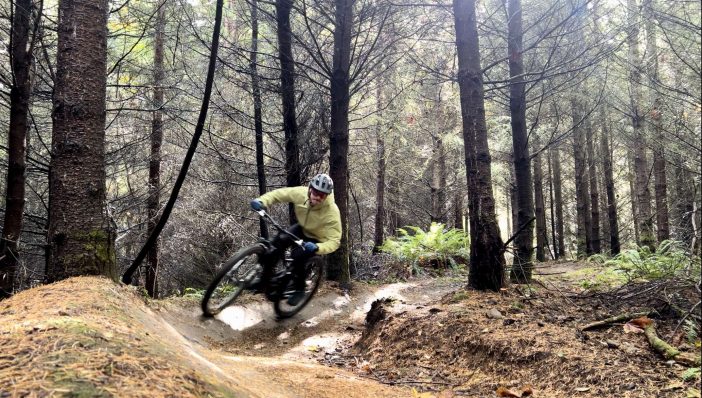
Safety and Value for Trail Riding
If you read my review for the Trek Blaze WaveCel, buckle up. This is about to strike some very familiar chords. Let’s start with differences though. The reality is, the Trek Rally and the Trek Blaze are the fraternal twins of the helmet world. Both offer almost the exact same feature set (though the Blaze does come with a magnetic break-off visor, removable ear pads, and a slightly different ventilation pattern). When you take the earpieces off the Blaze, it’s honestly difficult to distinguish from the Rally. So what’s different? The Rally fits squarely into the Trail helmet category… and costs $90 less. That’s a meaningful difference, and you really don’t sacrifice a lot to get there.
In fact, the Rally even scores better in the esteemed Virginia Tech testing, getting an 11.32 STAR value to the Blaze’s 12.69. Now, the organization rightly categorized both as 5-star helmets, so there’s no knock on the Blaze. But it’s worth belaboring the point that the Rally loses nothing in safety rating to its beefed-up, enduro-focused brother. For whatever reason, it’s actually better in that department.
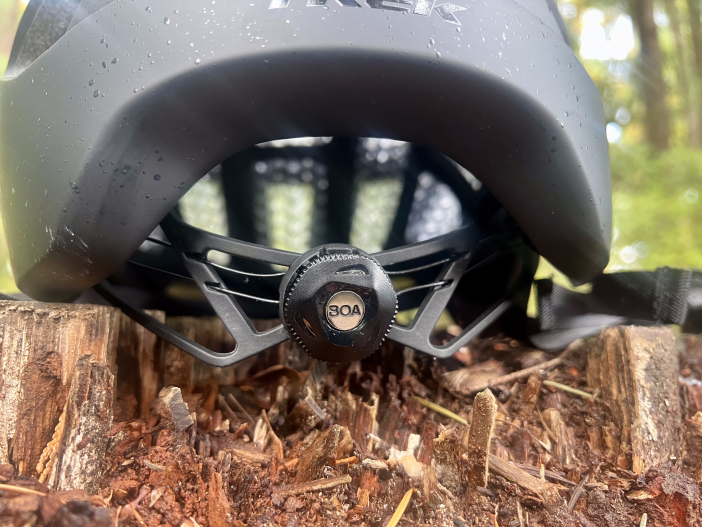
In most other ways though, the Rally stays on par with the high standard of the Blaze. Features-wise, for instance, they share a common DNA. The Rally sports a BOA dial in the back to adjust fit, and it works quite well. The lid also has a Blendr mount on the top which a person can use for a light for night riding or for a GoPro, should “footy for the boys” be your MO… I can’t say it’s mine, but perhaps I have less to share. Regardless, it’s a nice feature which is made even better by the fact that it breaks free in the event of a crash.
The features do not end there though. As I have said before, so I will say again: I love the Fidlock buckle. The Rally uses it well, and I find it to be a genuine improvement on the standard buckle. While testing, I found it significantly easier to operate with the added bonus that it never pinched my neck. Serious demerits are awarded for anything that pinches my neck, and the Rally abstained, thanks largely to Fidlock.

The only feature I did not like was the integrated glasses storage in the visor. I just always found myself fighting it, with the visor grabbing the arms of my glasses, restricting their entry, then not letting go when I tried to get them back. It ended up being a two-handed affair, which, for me, sort of defeats the purpose of integrated storage. It’s supposed to be easy and doable while riding. I wasn’t able to.
Riding around under the visor of the Rally this Summer was good. I found the fit comfortable and stable, and didn’t note any spots where there was excessive rub or undue pressure. No complaints on that front. My only note is on heat. It’s not the most airy helmet I’ve worn. That’s not due to lack of ventilation ports (those are large and ample). I believe it has to do with the way that air flows through and does not flow through the WaveCel layer.

For the front of the helmet, air is channeled through the WaveCel directly to your head. Great. For the sides and top, air doesn’t flow in those directions, so the ventilation ports don’t channel air through the WaveCel layer in the same manner. It’s left to passive ventilation, which is less effective in cooling down your head. For me, this meant that the Rally didn’t go outside on days that were above 75 degrees. I have options that are better suited for that weather, and I’m not keen on dripping sweat.
WaveCel is, overall, an improvement on other technologies of its general type though. That much was clear to me in testing. It fills a role in the market which was formerly occupied by both Koroyd and MIPS. I’m not arguing that either of those is obsolete. They aren’t. What I am here to say is that WaveCel has better ventilation properties than Koroyd and performs up there with MIPS on rotational impact tests. It’s a contender in the brain-protection space, and the Rally is better equipped to have WaveCel on its side.

Would I recommend the Rally to a friend? It’s an easy yes. Safety ratings do a lot for me, and fun features tickle my fancy, but value. Value is where I get stoked. $160 is not cheap, no. But $160 gets you a whole lot with the Rally, and I’m here for it. Add that to the fact that it’s comfortable for almost every day of the year up here in the PNW, and we’ve got a winner in my books.
Fit: According to Trek’s size charts, I have a medium sized head. I ordered a Medium. It fit. No complaints.
Buy Now: Available from Trek
The Bottom Line
This helmet is the value option of Trek’s recent MTB helmet launches, but don’t let that get you thinking that it’s lesser. It’s a comfortable, feature-packed trail lid with exceptional safety ratings. As long as you’re not looking for a hot-weather extraordinaire, I’d recommend it.
The Good:
- Virginia Tech’s 5-star safety rating matters
- BOA fit, Blendr mount, and magnetic breakoff visor are all great, effective features
- Fidlock buckle is fantastically easy to use
- Comfortable
- Value for money is good here
- Good aesthetic
The Bad:
- Integrated glasses storage is hard to use
- Runs on the warm side
- Protection Features
- Breathability
- Fit & Adjustability
- Weight
- Value
